Bitcoin Mining Difficulty Drops 9.1%, the Biggest Cut Since June
Bitcoin's mining difficulty fell 9.13% to 134.82 T on November 14, the largest downward adjustment since June, as miners switched off machines.
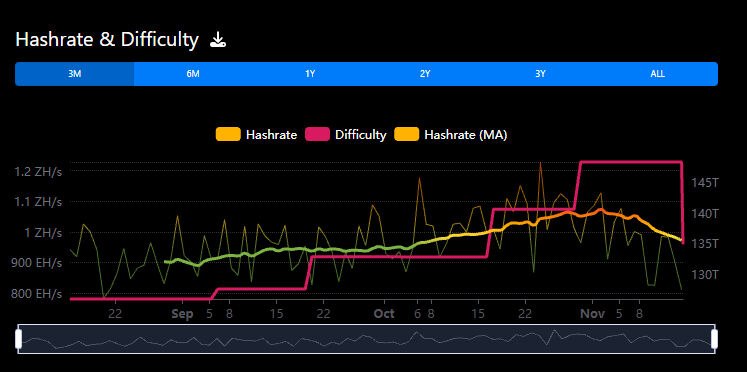
Bitcoin's mining difficulty fell 9.13% to 134.82 T on November 14. It is the biggest downward adjustment since June.
Why it matters
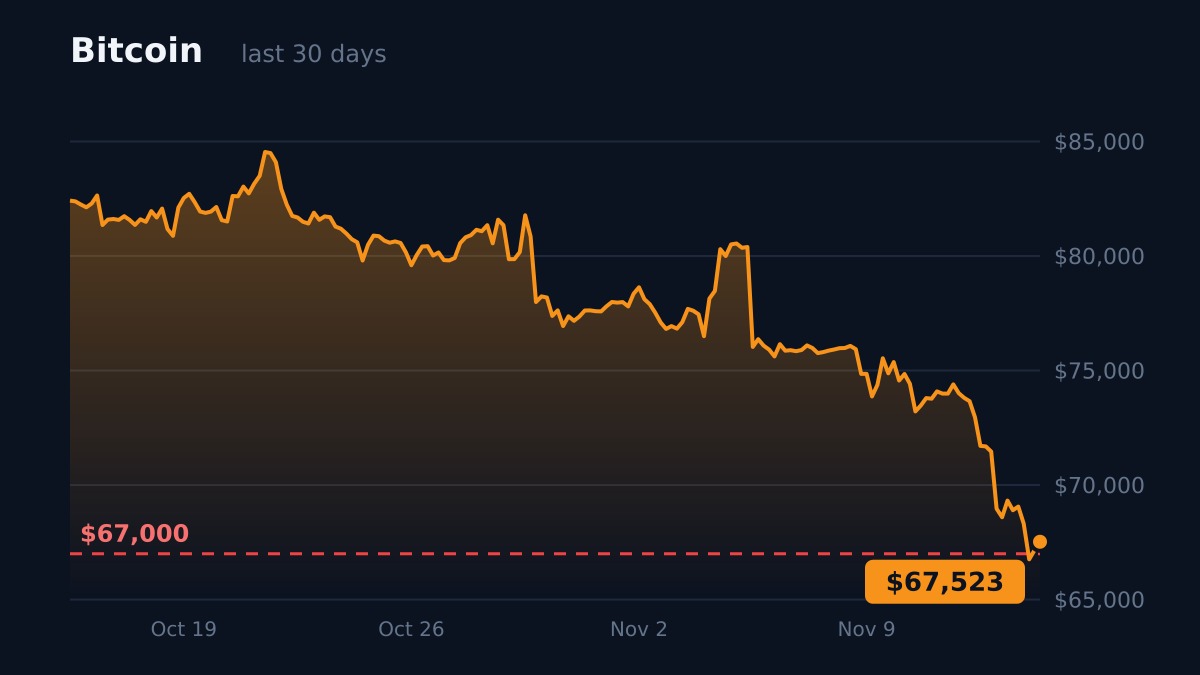
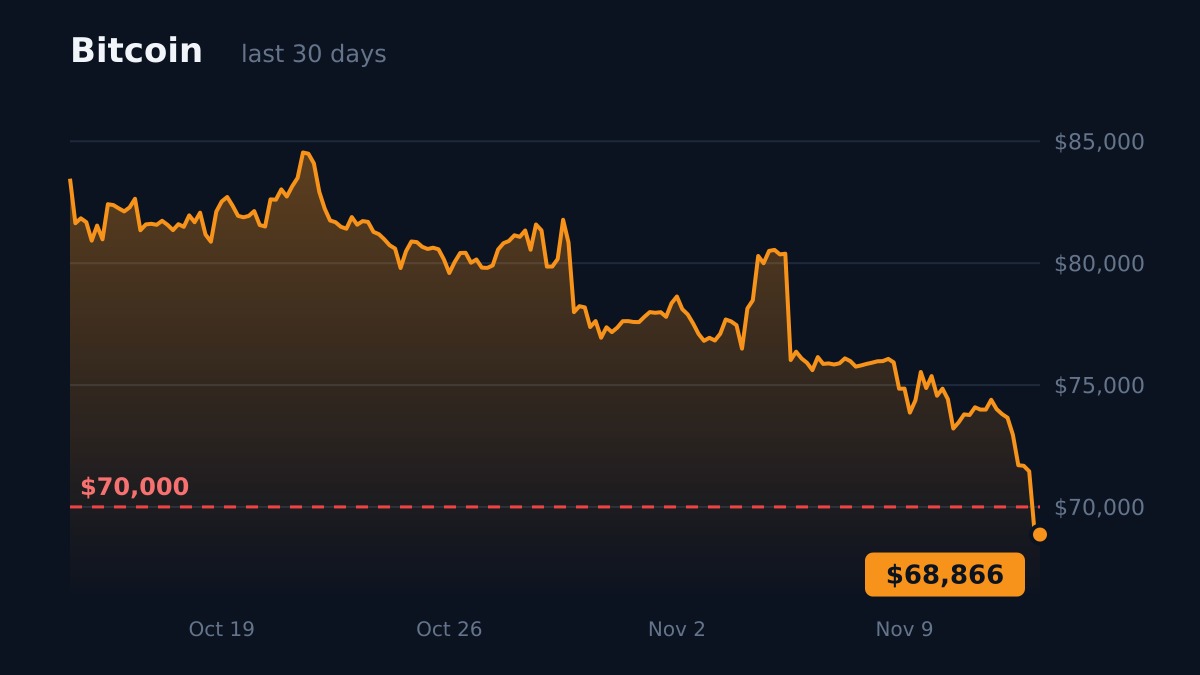
A drop this large means a noticeable share of miners have switched off their machines. Bitcoin's price fell from about $80,000 in early November to below $70,000, so older and less efficient machines stopped paying for their electricity.
For miners who stay on, the cut is good news. Each of them now earns more bitcoin for the same amount of work. That lowers the cost of mining one bitcoin and eases the pressure on miners to sell their coins to cover bills. Miners selling less is one less source of supply on the market.
How difficulty works
Difficulty is how hard it is to find the next block of transactions. The network resets it about every two weeks, every 2,016 blocks, so that a new block keeps arriving roughly every 10 minutes. When the computing power securing the network, the hashrate, falls, blocks start coming slower, and difficulty adjusts down to match.
The network's hashrate peaked in late October and has been falling since. Analysts watch this kind of miner stress with the Hash Ribbons indicator. In the past, the end of a miner shake-out has often come close to a market low, though it is not a reliable timing signal.
- #bitcoin
- #mining
- #difficulty
- #hashrate
Track it live
Indicators behind this story, updated daily.
- Bitcoin Mining CostLive estimate of the electricity cost to mine one bitcoin, compared with the BTC price. Adjust miner efficiency and power price to see your own break-even.$54,037per BTC
- Bitcoin Hash RibbonsAre Bitcoin miners capitulating? Live Hash Ribbons from the 30- and 60-day hashrate averages, every buy signal since 2011, and how they compare with buying on a random day.No capitulation79 days
- Crypto Fear & Greed IndexToday's Crypto Fear & Greed Index with history since 2018, plus what Bitcoin actually did over the following 30 and 90 days after each zone.13Extreme Fear
- Bitcoin technical analysisTrend, RSI, moving averages, support and resistance for BTC, updated daily.