Lead
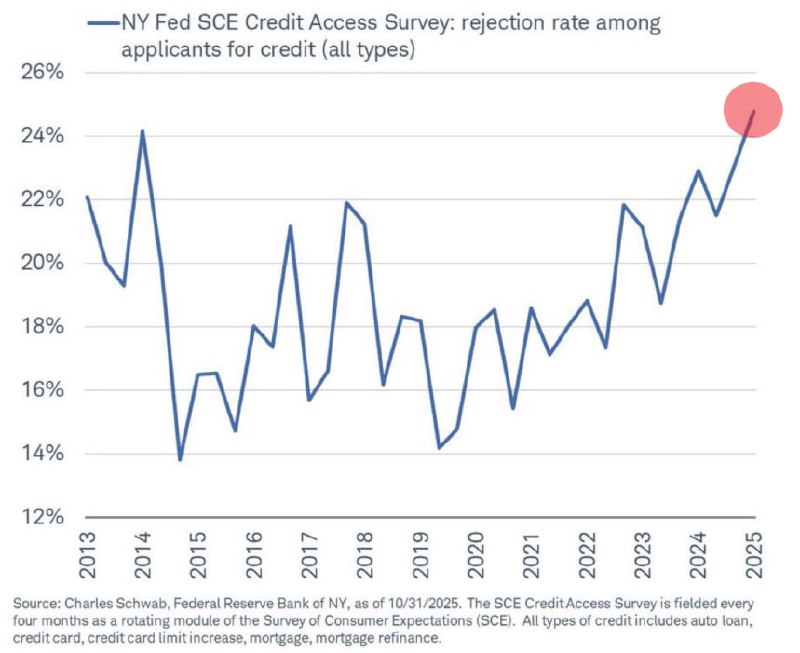
U.S. consumer credit application rejections are approaching 25%, the highest level on record, according to the New York Fed’s Survey of Consumer Expectations (SCE) Credit Access Survey as of October 31, 2025. The increase highlights tightening lending standards that could weigh on household spending and risk appetite across markets, including cryptocurrencies.
Key Developments
- The rejection rate has trended higher from roughly 15% to 24% between 2013 and 2025, reaching a new peak near 24–25% in 2025.
- This marks the highest rejection rate in the survey’s history, signaling more restrictive access to consumer credit.
- The figures are drawn from the NY Fed SCE Credit Access Survey (as of 10/31/2025), which tracks U.S. consumers’ experiences applying for credit and lenders’ responses.
Rejections near 25% indicate historically tight credit conditions that may constrain consumer demand and amplify macroeconomic uncertainty.
Why It Matters for Crypto
- Tighter credit conditions can reduce household liquidity and discretionary spending, often dampening risk-on sentiment that supports flows into Bitcoin and broader cryptocurrencies.
- Reduced access to traditional credit may also spur interest in decentralized finance (DeFi) borrowing alternatives, although such shifts depend on risk tolerance and regulatory dynamics.
- Heightened macro uncertainty linked to credit tightening can increase market volatility, a factor crypto traders often monitor closely.
Context and Outlook
The SCE Credit Access Survey provides a window into how easy or difficult it is for consumers to obtain loans and credit lines. A sustained rise in rejection rates typically reflects stricter lending standards and/or weaker borrower profiles.
Looking ahead, market participants will watch upcoming credit conditions data, labor market readings, and any shifts in monetary policy for clues on whether lending standards will ease. For digital assets, the balance between tighter liquidity and ongoing institutional adoption could shape near-term price action and volatility.
For methodology and historical data, refer to the New York Fed’s SCE program overview: New York Fed SCE.
Conclusion
With U.S. consumer credit rejections near a record 25%, signs point to a more constrained credit environment. That backdrop may temper consumer spending and risk-taking, with potential spillovers into crypto market sentiment as investors reassess liquidity and macro risks.